There’s Hope After Brain Injury: Dr. BJ Scott on Recovery and Returning to Work
Brain injury often recovers better when workers get the right support at the right time. Neuropsychologist Dr. BJ Scott explains that many people need more than rest or scattered appointments. They need a program that helps them build stamina, address interfering factors, notice symptoms early, and respond before those symptoms turn into a crash.
After a concussion or other brain injury, many workers feel stuck. They may try to rest at home. They may go to individual appointments. Still, they may not feel significantly better. Recovery can feel confusing, especially when symptoms rise with activity and then settle with rest. Dr. BJ Scott is a neuropsychologist and the BIRP Program Director at Convivio Health. In her interview, she explains who this program helps, why coordinated care matters, and why returning to work after a brain injury can still be possible.
The Reader’s Challenge
Brain injury recovery can stall when workers keep overdoing it, crashing, and repeating the same cycle. Dr. Scott explains that this pattern is not always obvious at first. Many people think they feel fine, do more, and only realize later that they pushed too far.
That matters because brain injury symptoms do not always show up in a dramatic way. The “sweet spot,” as Dr. Scott describes it, is often subtle. A worker may notice small changes and still feel able to continue. However, that is often the moment when support helps most. Instead of waiting for symptoms to spike, the goal is to catch them early and use strategies before the body goes into a harder crash. Dr. Scott teaches patients how to give their bodies “safety messages” while they are doing more, either physically or mentally.
She also makes an important point about diagnosis. A worker does not need loss of consciousness or a positive MRI to be diagnosed with a concussion; often, there is only alteration of consciousness. In milder injuries, MRI findings are often negative because the injury is more metabolic than structural. This is a positive thing and points towards a good prognosis if the worker carefully moves forward to re-engage with exercise and important activities.
The practical takeaway is simple. If recovery feels stalled, this does not usually mean you need more rest. It may mean you need help breaking the pattern that keeps symptoms wired in.
A Practical Path Forward for Brain Injury Recovery
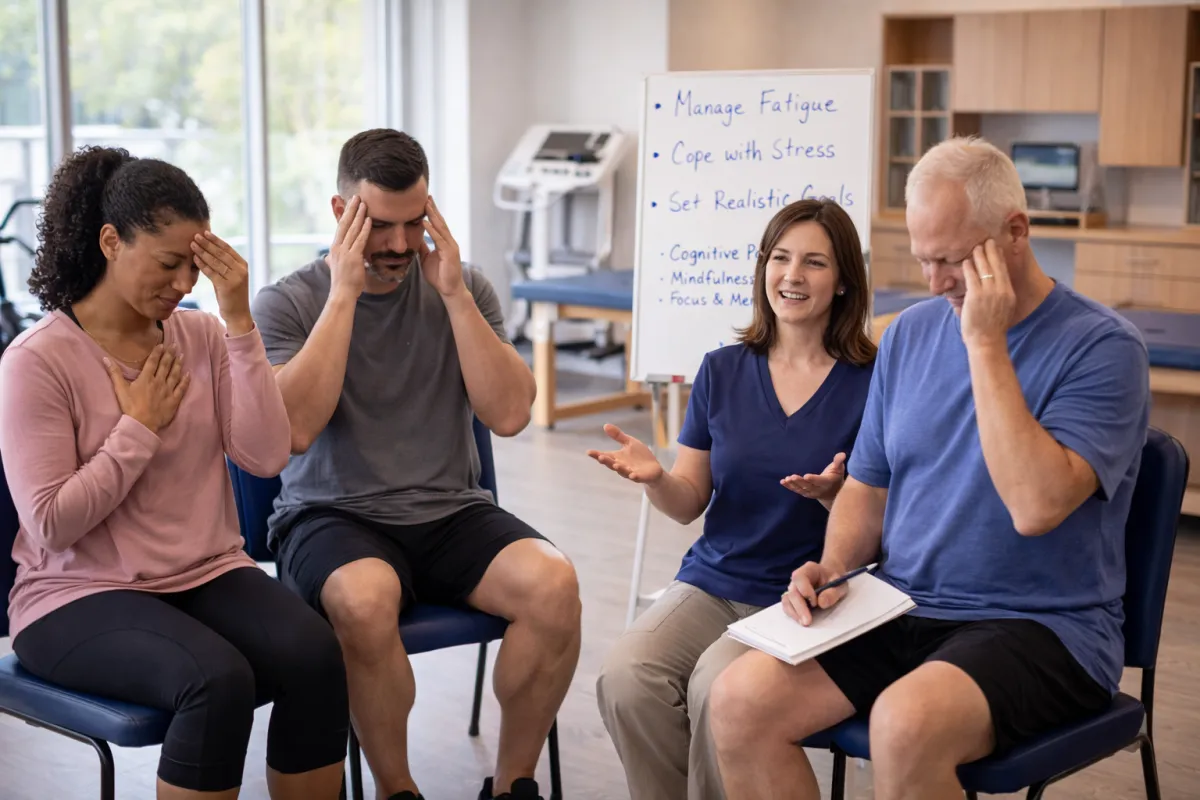
Brain injury recovery often improves when care happens in real time across a coordinated team. That is one of the biggest ways BIRP differs from isolated appointments. In standard care, workers often have to learn something in one session and figure out how to apply it on their own all week. In BIRP, the team helps while symptoms, effort, and stress responses are all interacting in the moment.
Dr. Scott describes the program as intensive, interdisciplinary, and transdisciplinary. Patients work with providers in the same place at the same time, often with co-treatment and shared language throughout the day. The program usually involves four to six hours of treatment with breaks and support. During that time, workers may work with physical therapy, occupational therapy, speech therapy, physicians, behavioral health, neuropsychology, and a vocational specialist. The team helps them build exertional tolerance, improve body awareness, support emotional regulation, and connect recovery to real work goals.
This approach matters because brain injury recovery is not just about doing less while you recover. Dr. Scott says the latest research supports getting started as early as possible for the workers who need this level of care. Earlier support can help teach the brain what to wire up and may shorten treatment time and time away from work.
The practical takeaway is clear. When a worker still feels stuck, a more integrated program may offer the structure, support, and real-time coaching needed to move forward.
The Transformation or Results
The goal of brain injury recovery is to help workers get back to their lives, not just reduce symptoms. Dr. Scott says success means getting back to feeling like you are who you are because you can do the things you value that give you joy and purpose.
This idea matters because work often connects to much more than a paycheck. Dr. Scott explains that return-to-work goals overlay the whole program. From the first evaluation, the team talks with the worker about what is possible, what support may be needed, and what next steps fit their life. For some people, that means returning to the job of injury. For others, it may mean retraining for a different kind of work. Either way, the plan stays individualized and work-focused.
The group setting also helps. Dr. Scott notes that brain injury and time away from work can feel isolating. In the program, workers recover alongside peers who are also moving forward. As they see other people use strategies, improve, and reach important goals, they begin to imagine more possibilities for themselves. This is one reason that hope after brain injury can grow inside a structured program.
Her closing message is especially strong. The brain is capable of a lot of recovery, and with careful help to get out of the wired-in patterns that can follow a concussion or brain injury, recovery may be far more possible than people automatically think. For many workers, that is where returning to work after brain injury starts - with a clearer path and renewed hope.
Conclusion
Brain injury recovery can keep moving forward, even when a worker feels discouraged or stuck. Dr. Scott’s message is that the right support can help workers notice symptoms earlier, break the overdoing-it-and-crashing cycle, and build toward real-life goals in a safer way.
That is why a coordinated program can matter so much. Instead of leaving recovery to trial and error, the team helps workers understand what is happening, what strategies help, and what progress can look like over time. There is real hope after brain injury, and returning to work after brain injury can remain a meaningful part of the plan.
About the Guest
Dr. BJ Scott is a neuropsychologist and the BIRP Program Director at Convivio Health. Her background includes work with people across the recovery continuum, from inpatient rehabilitation after severe injuries to later-stage recovery and return-to-life adaptation.
About the Company
Convivio Health provides work-focused rehabilitation services for injured workers. Its Brain Injury Rehabilitation Program brings multiple disciplines together in real time to support function, symptom management, and return-to-work planning.