SIMP Pain Management: How Mindfulness Empowers Recovery
Recovering from a work injury can feel overwhelming. Pain lingers. Confidence drops. Many injured workers start to wonder if their bodies have failed them.
This is where mindfulness in pain rehabilitation can make a real difference.
In this Work Injury Washington conversation, Gabriela “Gaby” Sanchez Samano, an Occupational Therapy Assistant at Convivio Health, shares how mindfulness, movement, and active participation help injured workers regain control of their recovery. Her approach supports patients in Structured Intensive Multidisciplinary Programs (SIMP) by helping them feel safe, capable, and confident again.
Gaby’s work focuses on one clear goal: empowering people to take an active role in healing, not just managing symptoms.
Understanding Pain Beyond the Injury
Pain is not always a sign of damage. This idea can be surprising for many injured workers.
After an injury, the nervous system often stays in a constant state of alert. The body looks for danger, even when tissues are healing. This can feel scary and unpredictable.
Gaby explains that many patients arrive feeling stuck in fear. They avoid movement because they worry it will make things worse. Over time, this can slow recovery and increase stress.
“Pain doesn’t always mean danger,” she shares. Learning this concept can shift how patients relate to their bodies and their symptoms.
Mindfulness helps patients notice what is happening in the moment without panic. This awareness becomes the first step toward progress.
How Mindfulness in Pain Rehabilitation Works
Mindfulness is often misunderstood. In rehab, it is not about emptying the mind or sitting still for long periods.
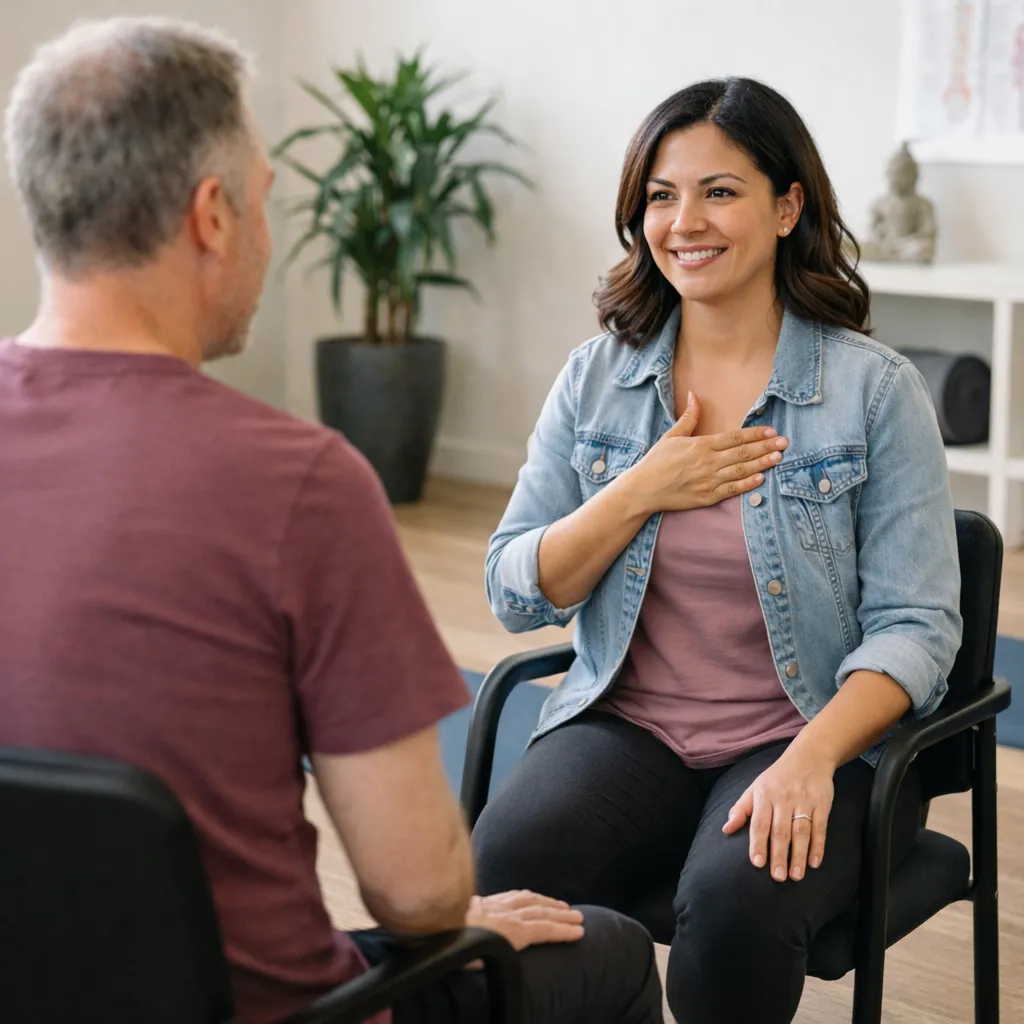
Gaby introduces mindfulness as a mental exercise. It trains attention and awareness, starting with something simple: the breath.
“Breath is the easiest way to change how we feel in the moment,” she explains. “Even a few breaths can create a reset.”
Through guided breathing, patients begin to notice physical cues like muscle tension or breath holding. They also explore emotional responses, such as fear or frustration, around pain.
This awareness helps patients respond differently. Instead of stopping completely, they learn how to slow down, adjust, and keep moving safely.
Over time, mindfulness builds self-regulation skills. These skills allow injured workers to handle stress, discomfort, and uncertainty with more confidence.
Occupational Therapy for Chronic Pain Builds Active Recovery
In SIMP pain management, recovery is not something done to the patient. It is something the patient actively participates in.
Gaby describes the difference between passive and active recovery in simple terms. Passive recovery includes treatments that help symptoms in the moment. Active recovery builds strength, tolerance, and confidence over time.
“Active recovery strategies build capacity,” she says. “They help people move forward in real life.”
Occupational therapy for chronic pain focuses on skills people can use every day. This includes gradual movement, strength training, posture awareness, and pacing. Mindfulness is part of this process because it supports decision-making during movement.
Instead of pushing through fear or avoiding activity, patients learn how to listen to their body and respond with intention.
Pain Management Through Movement and Yoga
Yoga plays an important role in Gaby’s work at Convivio Health. In the clinic, yoga looks very different from what people see online.
Many patients arrive hesitant. They worry they are not flexible enough or strong enough. Gaby reassures them that yoga in rehab is about exploration, not performance.
The clinic uses chair yoga and gentle movement. Patients are encouraged to move within their available range and stop when needed. Breath and movement are combined to help the body feel supported.
“The goal is to explore what is available to you,” Gaby explains. “What feels safe? What feels stable?”
As confidence grows, patients begin to modify movements on their own. This is a key success. It shows they are rebuilding trust in their body and learning how to adapt safely.
Yoga is also inclusive. Movements can be adjusted for orthopedic injuries, chronic pain, or low endurance. This makes it a valuable tool for pain management through movement.
Injury Recovery and Self-Regulation in Action
One of the most powerful parts of Gaby’s work is watching patients transform.
She recalls a patient who arrived with high anxiety and very low activity tolerance. At first, the patient could not tolerate more than a few minutes of exercise.
Through breath work, mindfulness, and gradual movement, the patient learned how to stay present with symptoms instead of panicking. She learned she could slow down, adjust, and continue safely.
By the end of the program, that same patient was participating fully in class and sharing what she had learned with others.
“That awareness changes everything,” Gaby says. “It helps people move from fear to confidence.”
This is the heart of injury recovery and self-regulation. Patients gain tools they can use long after therapy ends.
Why Feeling Safe Comes First
After injury or trauma, the nervous system often stays in fight-or-flight mode. When the body does not feel safe, complex movement feels impossible.
Mindfulness, breath work, and gentle movement help create a sense of safety. Once that foundation is in place, patients can engage more fully in rehabilitation.
“If the body is only trying to survive, it cannot focus on healing,” Gaby explains.
By addressing the nervous system first, SIMP pain management programs help patients build resilience. This allows them to tolerate challenges and grow stronger over time.
The Role of the Care Team in SIMP Pain Management
Gaby emphasizes that recovery is never a solo effort. Mindfulness and yoga are part of a larger interdisciplinary approach.
At Convivio Health, therapists work together using consistent language and shared goals. This teamwork reinforces skills across all areas of care.
Mindfulness strategies introduced in one session are supported during strength training, work simulation, and education. This consistency helps patients feel supported and understood.
It also prepares them to transition back to work with confidence.
Recovery as an Opportunity for Growth
A work injury can be disruptive and deeply frustrating. It can also become an opportunity to learn new skills.
Gaby encourages patients to view recovery as a chance to reconnect with strengths that may feel buried after injury. Meaningful activities, creativity, and personal interests all play a role.
“Injuries are unfortunate,” she says, “but they can also be an opportunity for growth.”
By learning mindfulness in pain rehabilitation, patients often discover tools that support not only recovery, but life beyond work injury.
A Simple Place to Start
Mindfulness does not require special equipment or long sessions.
Gaby offers one simple reminder for patients and clinicians alike: start with the breath.
“It only takes a few seconds,” she says. “Even three breaths can make a difference.”
That small pause can open the door to safer movement, better choices, and lasting recovery.
About the Guest
Gabriela “Gaby” Sanchez Samano is an Occupational Therapy Assistant at Convivio Health. She works in pain management, brain injury, and work rehabilitation programs, integrating mindfulness, movement, and self-regulation to support recovery.
About Convivio Health
Convivio Health provides interdisciplinary rehabilitation programs for injured workers across Washington State. Its Structured Intensive Multidisciplinary Programs (SIMP) focus on restoring function, confidence, and return-to-work readiness.