


What Every Soccer Parent Should Know About Concussions
If your child plays soccer, you have likely worried about injuries, sprained ankles, bumps, bruises, and the occasional fall. But a soccer concussion in kids is different. It’s invisible, confusing, and often misunderstood. Many parents are told to “wait it out” or “just rest,” even though modern concussion care has changed.
As Dr. Albrecht, Sports Medicine Concussion Program Director at Convivio Health, explains:
“A concussion isn’t just a bump kids outgrow. It’s an injury that usually needs thoughtful, targeted treatment to ensure a full and safe recovery.”
This guide blends insights from two conversations with Dr. Albrecht to help soccer parents feel informed and confident when supporting a child after a head injury.
What a Concussion Really Is
A concussion is a brain injury caused by force, sometimes from a direct hit, but often from sudden movement. Many youth soccer head injury cases come from falls, player-to-player contact, or even routine headers.
Common Misunderstandings
Myth: If there’s no loss of consciousness, it’s not a concussion.
Fact: Most kids never lose consciousness.Myth: You must wake them up every hour at night.
Fact: This is outdated advice unless emergency symptoms are present.
Dr. Albrecht reminds parents:
“When families understand what’s actually happening in the brain, the process feels far less scary, and far more manageable.”
Recognizing Concussion Symptoms in Children
Kids show symptoms differently. Some notice changes right away; others feel worse as the hours pass.
Common concussion symptoms in children:
Headache or pressure
Dizziness
Sensitivity to light or noise
Irritability or unusual mood changes
Trouble focusing or slowed thinking
Sleeping more or less than usual
Parents often spot signs of concussion in kids before the child speaks up. A normally outgoing child may become quiet or emotional, or a player may insist they feel “fine” while rubbing their eyes or squinting.
Dr. Albrecht says:
“If parents notice something seems off, they’re often right.”
When to Go to the ER
Seek emergency care if your child has:
Any loss of or alteration in consciousness
repeated vomiting
a severe and worsening headache
trouble waking or staying awake
confusion or strange behavior
trouble walking or speaking
numbness or weakness
When in doubt, Dr. Albrecht reassures parents:
“If your gut says something is wrong, it’s best to get checked.”
Why ‘Just Rest’ Isn’t Enough Anymore
This is one of the biggest updates in concussion research. For years, the advice was strict rest, no school, no screens, no exercise. But we now know that too much rest can slow recovery.
Concussions can affect multiple systems:
Vestibular system (dizziness, balance)
Ocular system (eye tracking, focusing)
Neck muscles (headaches, stiffness)
Autonomic system (exercise tolerance)
Not only can they affect multiple systems but they affect these systems in different ways. This is why pediatric concussion treatment must match the child’s needs.
Dr. Albrecht explains:
“If a child injures their knee, we don’t just wait; we treat the specific structures involved. Concussions are no different: we treat the systems in the brain that are actually affected.”
What Treatment Looks Like Today
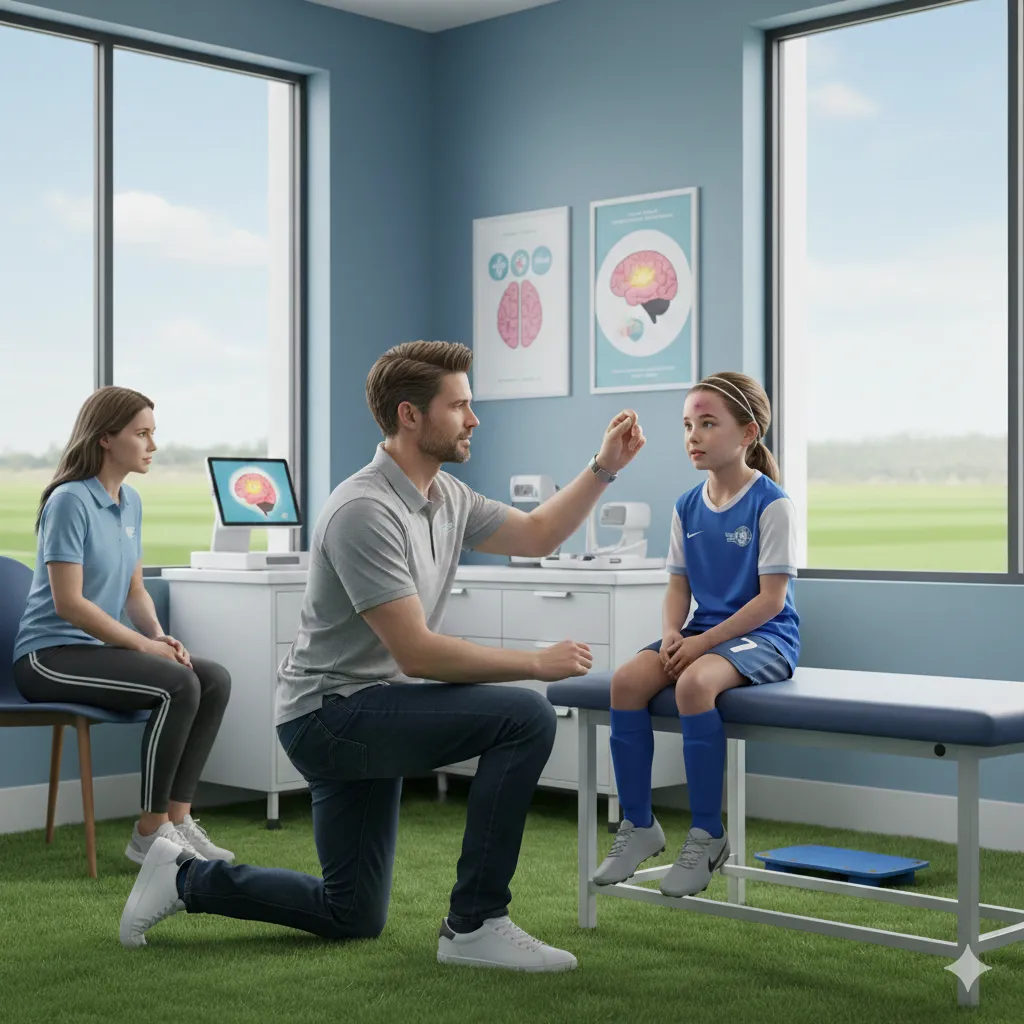
1. A Comprehensive Evaluation
This may include:
symptom review
balance and vestibular testing
vision and eye movement screening
neck assessment
cognitive testing
Exercise Tolerance Screening
Understanding which system is affected guides treatment.
2. Early, Light Activity
Kids usually benefit from:
walks
Light, non-contact play
stationary biking
These activities promote healing and improve mood.
3. Returning to School
All kids should return to school within 24 – 48 hours. Supports in these initial stages might include:
Structured breaks as needed
More time for assignments
reduced screen exposure
4. Targeted Therapy
Depending on symptoms, therapy may include:
vestibular therapy
vision therapy
neck physical therapy
guided aerobic exercise
How Long Does Recovery Take
Most kids recover in 2 – 4 weeks, but some take longer. Recovery outcomes improve when:
The concussion is identified early
Kids avoid re-injury
families follow medical guidance
treatment matches the child’s needs
Dr. Albrecht highlights:
“Early, appropriate care leads to excellent recovery in most kids. But when treatment is delayed, or not matched to the actual problem, recovery outcomes tend to suffer.”
Return to Play: A Soccer Parent’s Roadmap
Returning to soccer too soon is risky. Safe progression includes:
Symptoms improving
School functioning is returning to normal
Individualized exercise progression
Step-by-step physical activity under guidance
Kids should be fully recovered before re-engaging in any contact physical activity, including heading the ball or joining contact drills.
Your Role as a Parent
Kids heal best when they feel supported. What helps most:
listening without judgment
not pressuring their kids to return to unsafe contact activities too soon
reassuring them they will recover
A calm parent helps a child feel safe and hopeful.
Conclusion: You Don’t Have to Navigate This Alone
A soccer concussion in kids can feel overwhelming, but modern care is effective, personalized, and supportive. With early recognition and the right plan, most kids make a full recovery and return to the sport they love.
Convivio Health is here to guide you every step of the way.