What Getting Better Actually Looks Like After a Work Injury
Recovery from a work injury doesn't always announce itself. There's rarely a single day when you wake up and feel obviously better. Progress tends to show up in smaller, quieter ways, and if you don't know what to look for, it can be easy to miss it or dismiss it entirely.
Understanding what real recovery looks like can help you trust the process, communicate more clearly with your care team, and stay engaged when the path feels slow.
Recovery Doesn't Move in a Straight Line
This is one of the most important things to understand about rehabilitation. Progress is not a steady climb upward. Most people have weeks where things feel like they're moving in the right direction, followed by a harder day or a harder week that makes them wonder if they've gone backward.
That pattern is normal. It is not a sign that treatment isn't working. It's a sign that your body is doing the real work of rebuilding, adapting, and relearning.
The right question isn't whether every single day feels better than the one before. The right question is whether you're doing more this month than you were doing last month.
The First Signs Are Usually Small
When rehabilitation begins to work, the first signs are often small enough to dismiss. They're worth paying attention to.
You sleep a little better than you did a few weeks ago. You wake up less stiff. A movement that used to stop you completely is now uncomfortable but manageable. You make it through a task you had to quit halfway through before. You get through a full morning without pain being the main thing you're thinking about.
None of these feel like milestones. But they are. They're the early signals that your body is starting to respond to treatment.
You Can Do More Before You Run Out of Energy
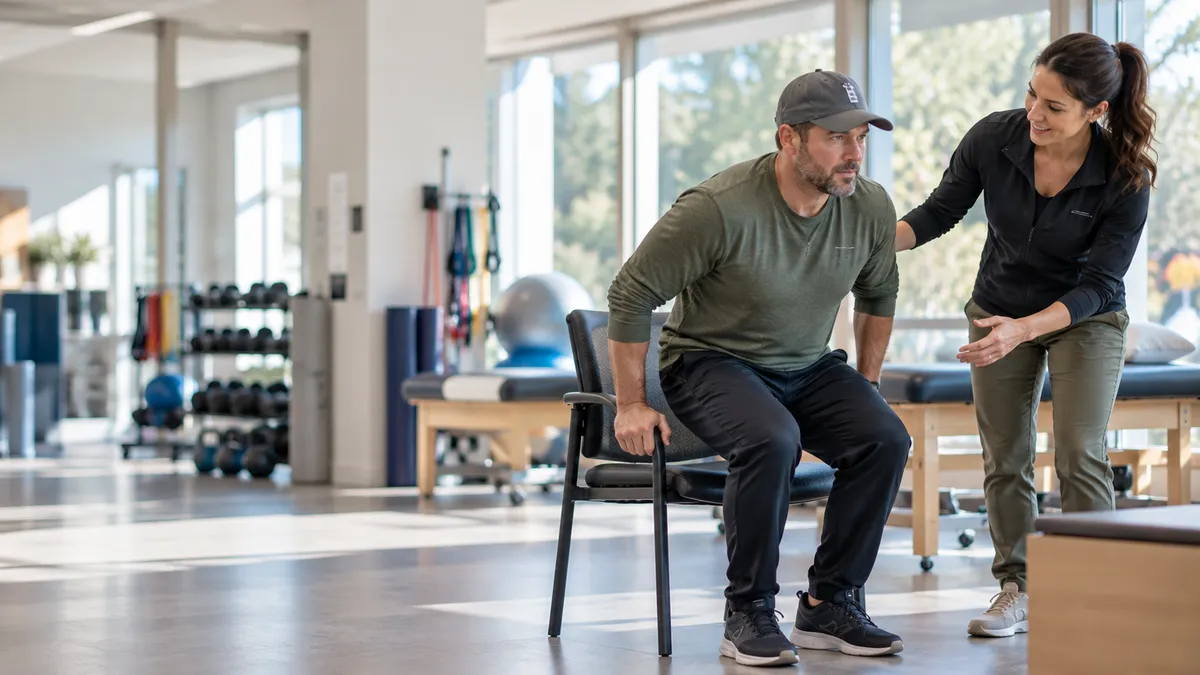
One of the most reliable signs that physical rehabilitation is working is stamina. Early in recovery, even small amounts of activity can wipe you out. As the weeks pass, if you're making real progress, you'll find that you can do more before fatigue sets in.
This might look like being able to walk further than you could a few weeks ago, standing through a full meal without needing to sit down, or carrying something light that would have left you resting on the couch before. The activities don't need to be dramatic. What matters is that your endurance is building, even gradually.
At Convivio Health, physical progress is tracked throughout the program, not just at the end, so you and your care team can see the changes in the data even on days when it doesn't feel obvious.
Pain Starts to Behave Differently
Pain changing is not the same as pain disappearing. In the early stages of effective rehabilitation, pain often shifts before it reduces. It may become more predictable. It may hurt during activity but recover faster than it used to. It may feel different in quality, even if the intensity hasn't changed much yet.
These shifts matter. They signal that your nervous system and body are starting to respond. True pain reduction often comes later, as function improves and the underlying drivers of pain begin to change.
If you're going through a Structured Intensive Multidisciplinary Pain program, your care team is working to help your body learn new ways to move and respond. Changes in how pain behaves, not just how much it hurts, are often the first sign that this is happening.
For Brain Injury Patients: When the Fog Starts to Lift
If you're recovering from a brain injury, the signs of progress can feel different from physical recovery. You may find that your concentration lasts a little longer before it drops off. Words come more easily than they did a few weeks ago. You feel less overwhelmed by a busy room, a screen, or too many things happening at once. You start sleeping more consistently. You feel more present in a conversation instead of struggling to track it.
These changes are subtle. They don't feel like dramatic improvements, and it's easy to write them off. But they reflect real progress. In a Brain Injury Rehabilitation Program, your care team tracks cognitive and functional markers over time so these shifts show up in the data even before you notice them day to day.
Confidence Is Progress Too
Physical and cognitive changes get all the attention in rehabilitation. But one of the most meaningful signs that things are moving in the right direction is confidence.
Early in recovery, many injured workers stop trusting their own bodies. They move carefully, brace for pain before it comes, and avoid activities that feel risky. That protective response makes sense at first. But over time, if rehabilitation is working, that protective posture starts to ease.
You reach for something without bracing first. You take a walk without dreading how you'll feel afterward. You start making plans for next week. These moments of confidence are not just emotional progress. They are functional progress. Confidence is what allows you to actually use the physical gains you're working to build.
A Hard Week Doesn't Erase What You've Built
There will be hard weeks. A day where pain spikes. A session that exhausts you instead of encouraging you. An evening where recovery feels further away than it did a month ago. These days are part of the process, and they don't undo the progress you've made.
What matters is the trend across weeks and months, not what any single day looks like. On a hard day, it's worth asking your care team: what does my progress look like compared to where I started? That question, and its answer, can be the most useful thing you hear all week.
When Progress Connects Back to Your Real Life
One of the clearest signs that rehabilitation is working is when it starts to connect to the things that actually matter to you. Not just "I completed the exercises" but "I was able to play with my kids for twenty minutes." Not just "my pain score dropped" but "I made it through a full grocery run without needing to stop."
Return to function is the goal of rehabilitation at Convivio Health, not just symptom reduction. Real recovery shows up in real life. When you start seeing those connections, even in small ways, it's a strong sign that the work you're putting into treatment is translating into something meaningful.
If you have questions about what recovery can look like for your specific situation, contact the Convivio Health team to talk through your options.