The Good Day Trap: Why Doing Too Much When Pain Eases Can Set You Back
The pain has been rough all week. Then one morning, something feels different. The tightness is a little less. The fog lifts slightly. You feel like yourself again, at least a little.
So you get moving. You do the laundry. You take the dog for a longer walk. You sit at the table for dinner instead of the couch. You push through a few things you have been putting off for days.
And then the next morning, you can barely get out of bed.
If this sounds familiar, you are not alone. This pattern has a name: the boom-bust cycle. For people recovering from a work injury with persistent pain, it is one of the most common things that keeps recovery from moving forward.
What Is the Boom-Bust Cycle?
The boom-bust cycle happens when activity levels go up and down with pain, day after day.
On good days (the boom), you do more than your body is currently ready for. On the harder days that follow (the bust), pain increases and you rest, sometimes completely. Then a slightly better day comes and the cycle starts again.
The pattern makes sense from the outside. When you feel better, you try to catch up. When pain comes back, you stop. But over time, this back and forth can make pain harder to manage and recovery slower.
It is not a character flaw. It is a very human response to pain that has been going on too long. And it can change.
If you have been wondering why pain sometimes does not improve with standard treatment, the boom-bust cycle is often part of the answer.
Why It Happens
Persistent pain changes how the nervous system responds to activity. The body becomes more sensitive, not just to physical strain, but to the signals that come before and after it.
When you push hard on a good day, the nervous system picks up on the strain and turns up the pain signal. When the crash arrives, you stop moving entirely. Over time, the swings can get wider. The good days can feel fewer and farther between.
This is not about weak muscles or a fragile back. It is about a pattern the nervous system has learned. And patterns can be changed.
Mindfulness works with a similar principle, training attention rather than fighting sensation. Here is how mindfulness fits into pain recovery for injured workers if you want to read more about that alongside pacing.
What Pacing Actually Means
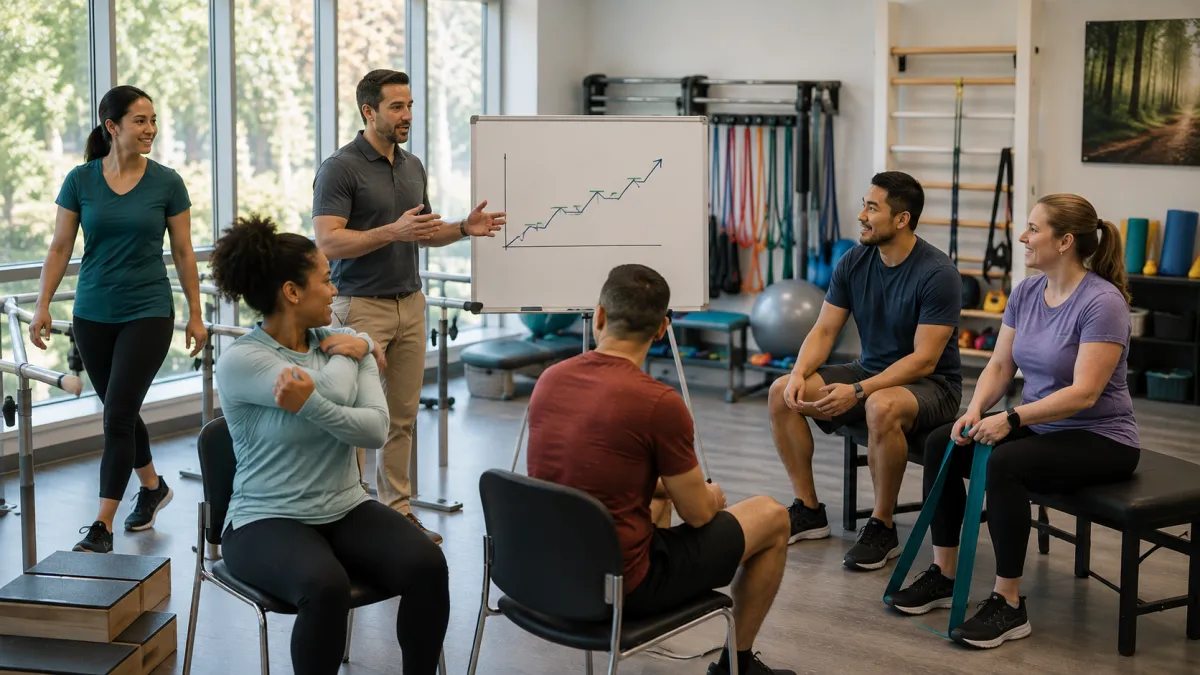
Pacing means keeping your activity level steady across both good and bad days, instead of letting pain decide everything you do.
It does not mean doing less. It means doing consistently.
Think of it like a daily energy account. You have a certain amount available each day. On a good day, it feels like the balance is high and you can spend freely. But if you overdraw on Monday, you will pay for it on Tuesday and sometimes Wednesday too. Pacing means spending within your balance every day, even when you feel like you could do more.
Over time, the balance grows. That is recovery.
One Way to Try It Today
You do not need special equipment or an hour of free time. Try this for one day.
Pick two or three things you want to accomplish. Not everything you want to do. Two or three.
Break each one into smaller pieces. Instead of cleaning the kitchen all at once, wipe the counter, rest for a few minutes, then load the dishwasher. Give yourself permission to stop in between.
Stop before you feel you have to. If you are walking, turn around when you still feel okay, not when pain tells you to stop. Movement, even in small planned doses, is not dangerous for most people with persistent pain. This piece on movement and chronic pain recovery explains more about why staying active matters.
Rest on purpose, not because pain forced you into it.
Notice how you feel the next morning. For many people, planned rest between activities allows them to do more overall than pushing through would have.
This will feel strange at first. Stopping when you feel okay goes against every instinct. But the goal is a steady line, not a series of highs and crashes.
What If Pacing Feels Like Giving Up?
It can feel that way.
When you stop an activity before pain makes you stop, it does not feel like progress. It can feel like you are letting the injury win.
But pacing is not giving up. It is training.
A work injury affects more than your body. The frustration of stopping when you feel okay is real. So is the grief of losing the version of yourself that did not have to think this carefully about energy. Those feelings are part of recovery too, not separate from it.
Athletes pace themselves during a long race not because they are weak, but because they know the finish line is further than the first mile. Recovery from a complex work injury works the same way. Consistent effort over time gets you further than sprint and collapse.
Your goal is not a perfect day. Your goal is a slightly better week.
When Pacing Is Part of a Larger Plan
For some people, the boom-bust cycle has been going on for so long that it is hard to change without support. Pain has become part of daily life, and shifting the pattern takes more than one strategy.
That is what the Specialized Intensive Multidisciplinary Pain (SIMP) program at Convivio Health is designed to address. Pacing is one of several skills built into the program and practiced with clinical support, as part of a coordinated plan that addresses the physical, functional, and emotional dimensions of persistent pain together.
If you are recovering from a work injury and standard treatment has not been enough, read more about who the SIMP program is designed for, then ask your doctor whether a referral could be the right next step, or reach out to the Convivio Health team directly.